

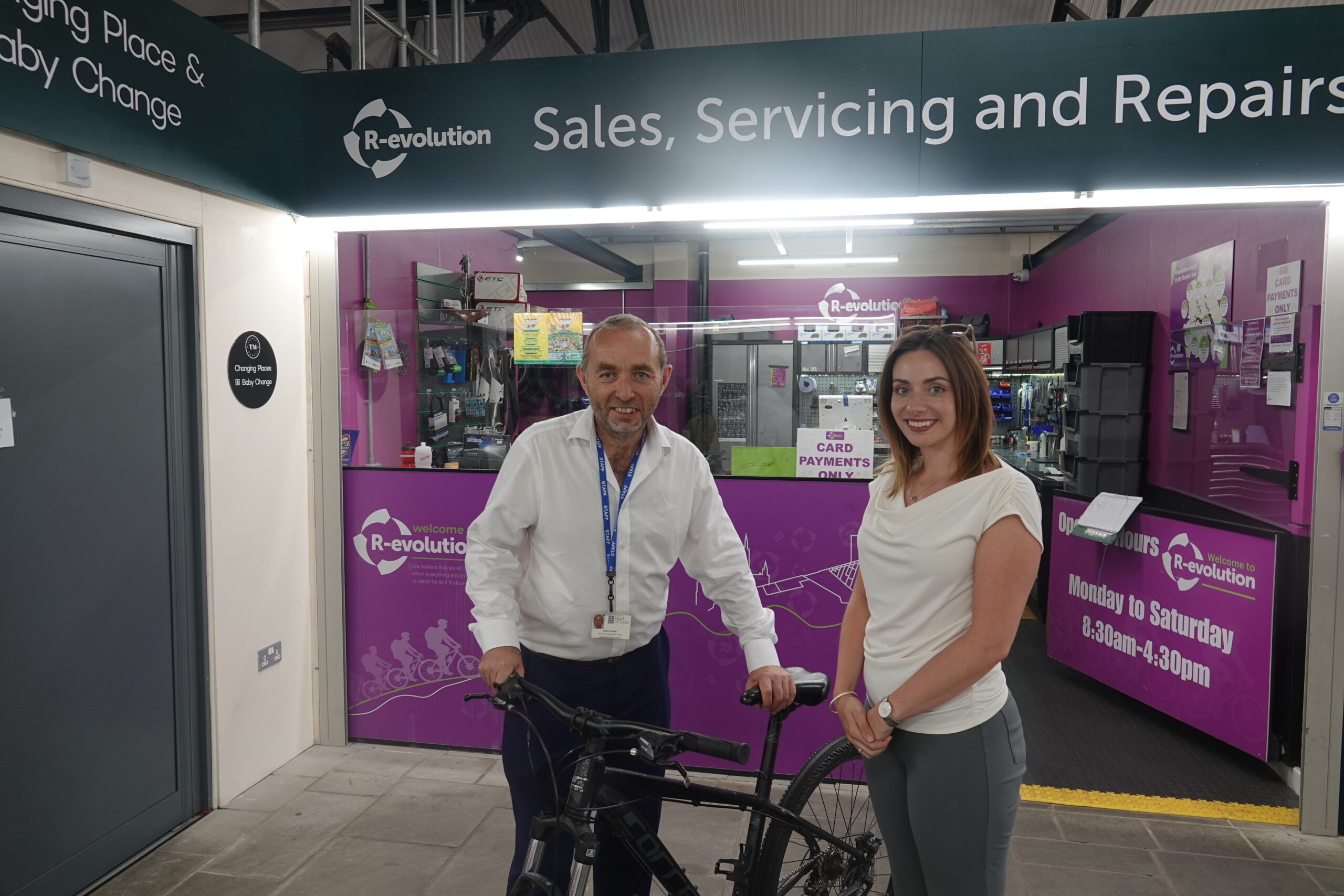
Adam Fowler, senior decarbonisation management officer (transport) at Hull City Council, outlines what your business or organisations needs to know to help keep workers cycling safely during the autumn and winter.
With more and more businesses and organisations incorporating sustainable travel into their mix – like Hull City Council – whether it is cycle to work schemes to improve staff health and wellbeing and encourage a more active commute or reducing their impact on the environment with pool bikes – it is more important than ever to ensure your staff have the right cycling skills and knowledge.
With winter just around the corner and the clocks recently turning back, the council is taking this opportunity to remind the city’s businesses and organisations about the legal requirement to cycle with lights and how to ensure bikes are in good working order. Stay safe, stay seen.
What is the legal requirement when it comes to bike lights?
In the UK there are legal minimum requirements for cycling between sunset and sunrise.
Make sure you have at least one front white light attached to your cycle, and at least one rear red light as well as a red reflector at the back and four amber pedal reflectors.
It may also be worth advising staff to keep a backup set of lights at work and a spare set of batteries.
There are many USB charged lights available, so you can charge them while you’re at your desk.
Depending on where your staff are cycling, they may also need their lights to see where they’re going.
Make sure lights are bright enough to light up the way and to gently angle the beam downwards at the road ahead, at an angle of around 3.5 degrees. This means riders can see where they’re going but take care not to blind oncoming road users and pedestrians so point down your front light.
The beam on the road also helps oncoming traffic see how far away the person cycling is, in contrast to a horizontal light which is harder to gauge.
Stay safe, stay seen
Being seen by other road users is vital when riding at night.
Wearing brightly coloured reflective clothing is a good way to stand out on dark, rainy, or foggy days. You can get reflective jackets to ensure you’re seen in the dark, or reflective accessories to attach to yourself or your bag. Remember to check any reflective clothing is kept clean so it remains clear.
Knowing the route
Seasonal changes could mean changing a regular route to a better lit path or road.
Some routes might include seasonal hazards, such as fallen leaves, wet and slippery and branches or icy patches so take particular care on the surface looking out for obstructions.
To make sure your staff don’t get lost on a new route, advise them to test it out in the daytime to build up confidence and familiarity.
View cycle routes in the city and plan a journey
Keeping bikes in good shape
Making sure a bike is in the best working order will greatly reduce the chances of experiencing problems while on the road. Don’t forget to check your brakes and tyres.
Fixing a bike on the roadside is a challenge and is even more difficult in the dark.
To avoid getting punctures, fit winter tyres to the bike and pump them up regularly.
Get in the habit of checking bike(s) regularly – simple checks and maintenance can help cyclists enjoy hassle-free riding and avoid repairs.
The ‘M check’ is a simple way to make sure a bike is safe to ride.
Finally, avoid cycling in the gutter as this is where most puncture-causing hazards can be found (broken glass and other debris).
Stay alert
It’s always important to be aware of one’s surroundings when cycling and even more so in the dark.
While these tips should help a person cycling to be seen by other road users, staying alert to what is happening will minimise any other risks.
Cyclists should go slower than they would in the daytime and keep their eyes peeled for unexpected obstacles, such as drain covers, areas of uneven road surface and movement by others on the road or path. Try and use well-lit routes particularly if off-road.
What other services can be accessed?
Businesses and organisations in Hull can discuss other cycling requirements with First Step Sports Group and R-evolution, both of which work with the council to help break down barriers to active travel.
First Step Cycle, part of First Step Sports Group, is funded by the council to run the Rusty Riders adult cycle training programme, which is delivered at various locations around the city, across the year, and is completely free to sign up for.
Sessions are around two-and-a-half hours and are led by a fully qualified instructor who takes participants through a variety of practical lessons designed to boost confidence and help those who haven’t cycled for a while gain the skills needed to ride on the city’s network.
R-evolution works with many businesses and organisation in the city to provide solutions to their staff transport needs, whether these be bike loans, Dr Bike sessions, to check and repair the bikes of commuters, or the loan of electric bikes to offer people the chance to try one out before they purchase.